File 02 AI Platform · Enterprise SaaS · Deloitte
One brief in, a full campaign out - without breaking brand
AI generation is fast; keeping it on-brand is the hard part. This platform turns a single campaign objective into content for every channel - Instagram to email to print - with the brand's own colors, type, and tone enforced at the moment of generation, not caught in review afterwards.
- Role
- UX strategy, user flows, visual design
- Team
- 4 designers (incl. design manager) + PM, engineers, QA
- Scope
- Campaign creation → publishing → performance tracking
- Also built
- The product's design system, from scratch
At a glance
- What it is
- An AI platform that turns one campaign objective into publish-ready content for every channel - Instagram to email to print.
- The problem
- Campaigns spanned four tools and constant designer intervention; raw AI generation was fast but drifted off-brand.
- My role
- UX strategy, core flows, and visual design on a 4-designer team - plus the product's design system, built from scratch.
- Key idea
- Brand as a structured input at the moment of generation - logos, type, tone enforced by the system, not caught in review.
- Beyond the screens
- Joined stakeholder grooming calls directly; narrowed the product's feature scope with suggestions that were adopted.
- The impact
- Four tools collapsed into one workflow; off-brand output prevented structurally rather than reviewed away.
The problem
Marketing teams were assembling every campaign by hand: a brief in one tool, creative in another, publishing in a third, performance tracking in a fourth - with a designer needed at every step to keep output on-brand. Generative AI could collapse that work, but raw generation drifts: wrong colors, wrong voice, wrong logo treatment. Speed without consistency wasn't worth shipping.
The core idea: brand as an input, not a checkpoint
The platform holds the brand itself - logos, type, reference imagery, illustration styles, tone of voice - as structured assets. Every generation call draws from them. A campaign starts from an objective; the tool writes the brief; and everything produced downstream inherits the brand automatically.
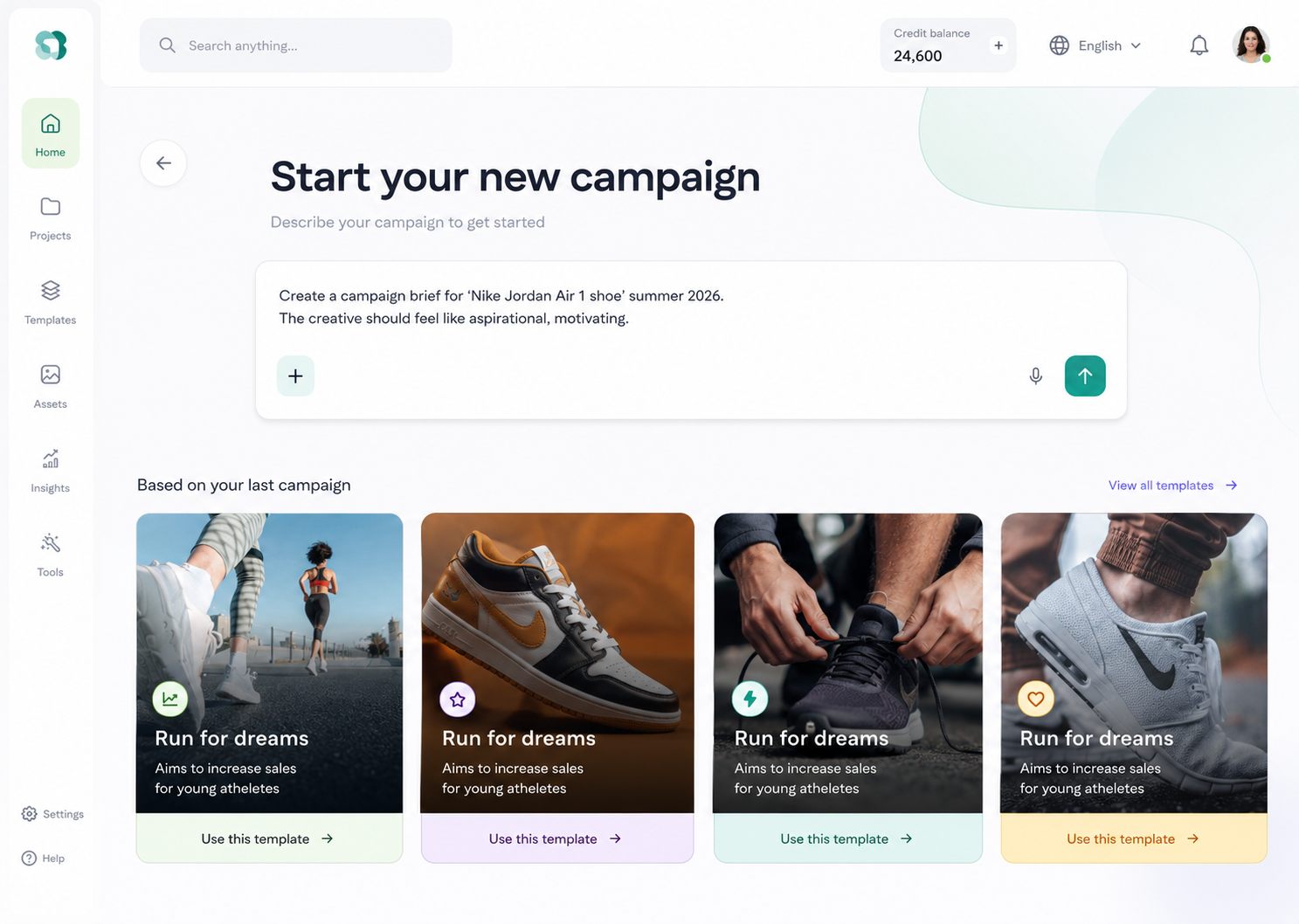
Designing a predictable frame for an unpredictable engine
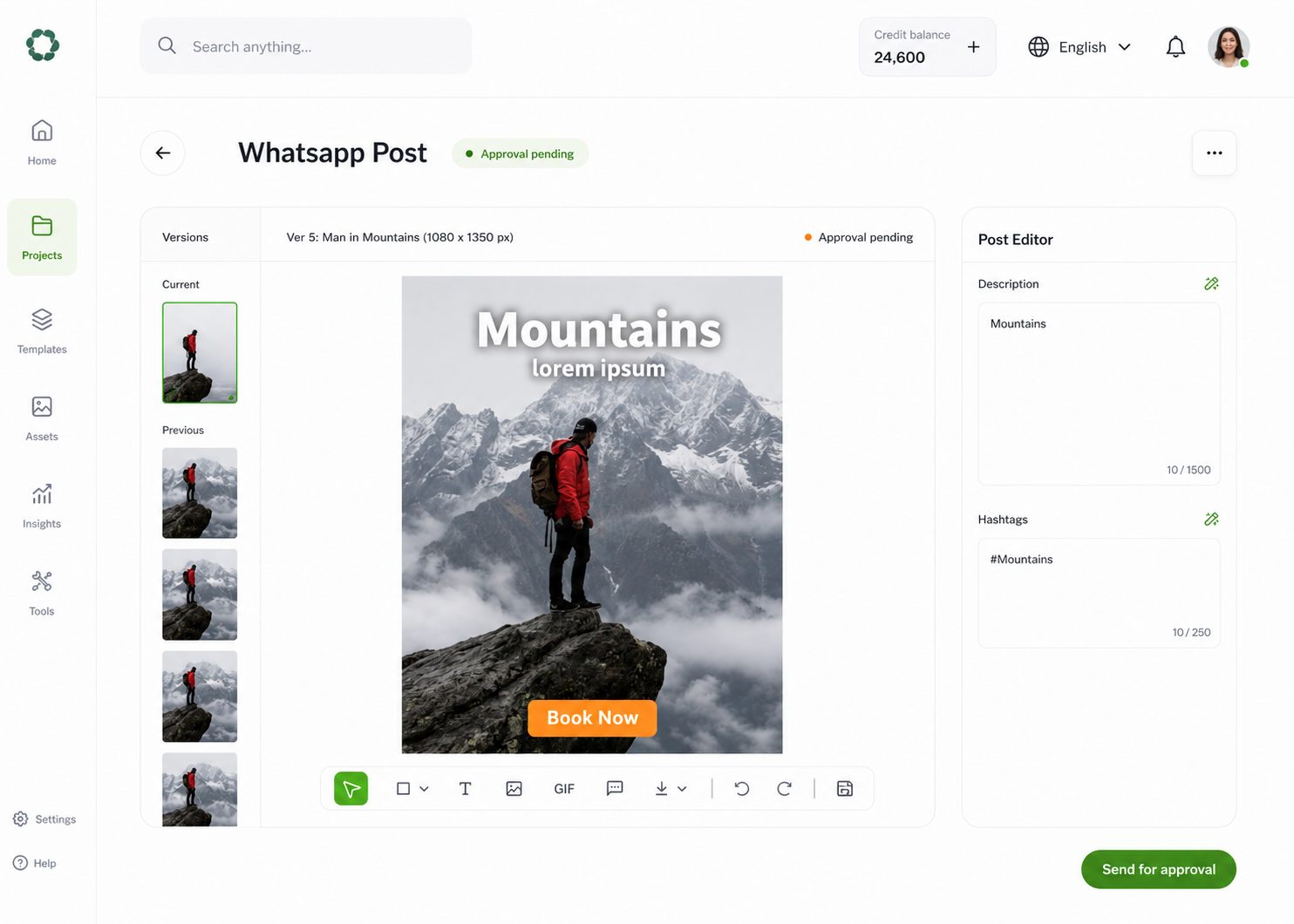
Model output varies; the workflow around it can't. I defined the UX strategy and core flows before any visual design, so that no matter what the AI produced, users always knew where they were: draft → in review → approved → published, with human approval gating every transition.
- Campaigns are organized by lifecycle state, so a marketer's first question - "what needs my attention?" - is answered by the nav itself.
- Generated content is grouped by channel, editable in place, and resubmitted for approval - iteration without starting over.
- Publishing and performance tracking live in the same workspace, closing the loop that used to span four tools.
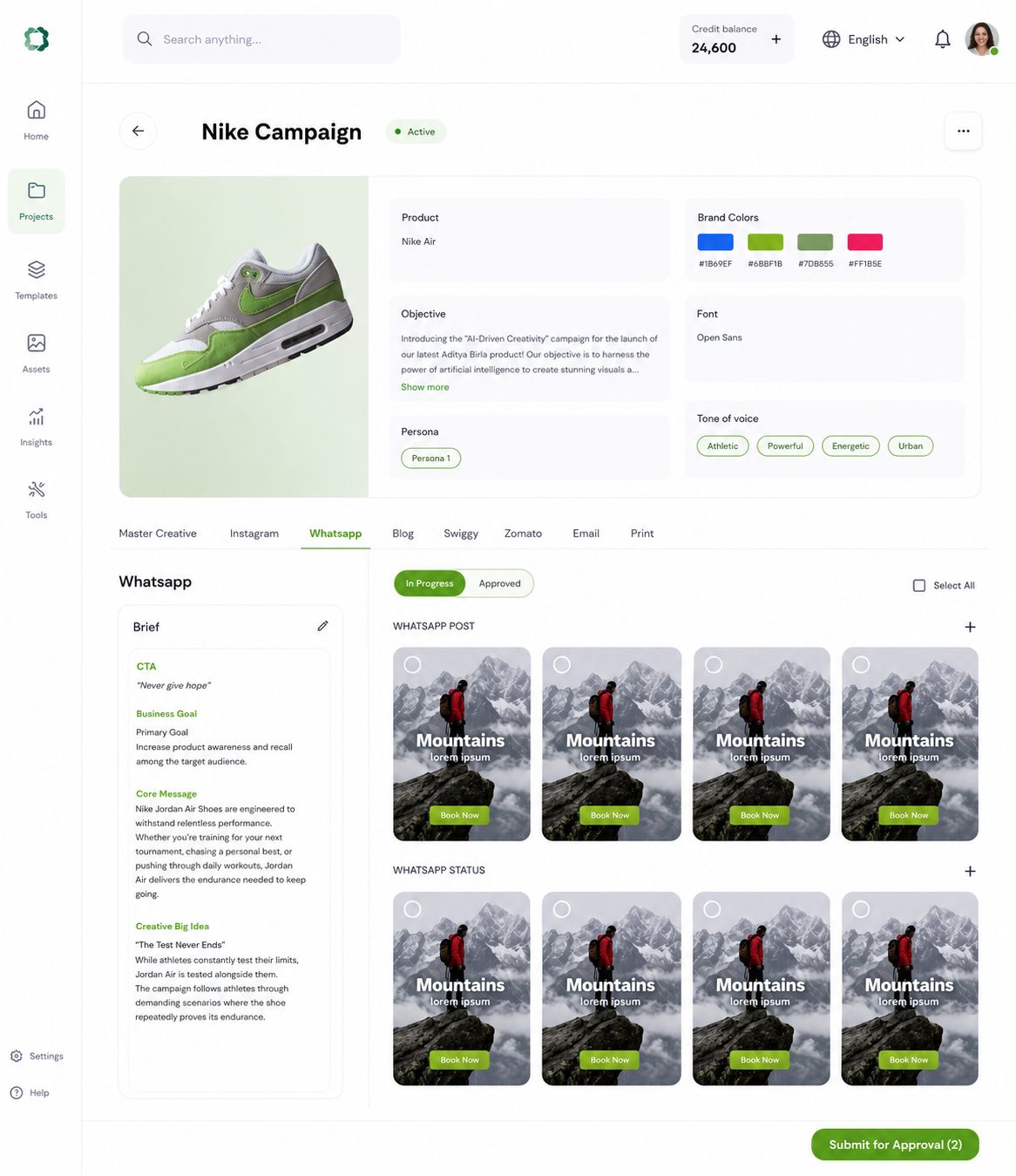
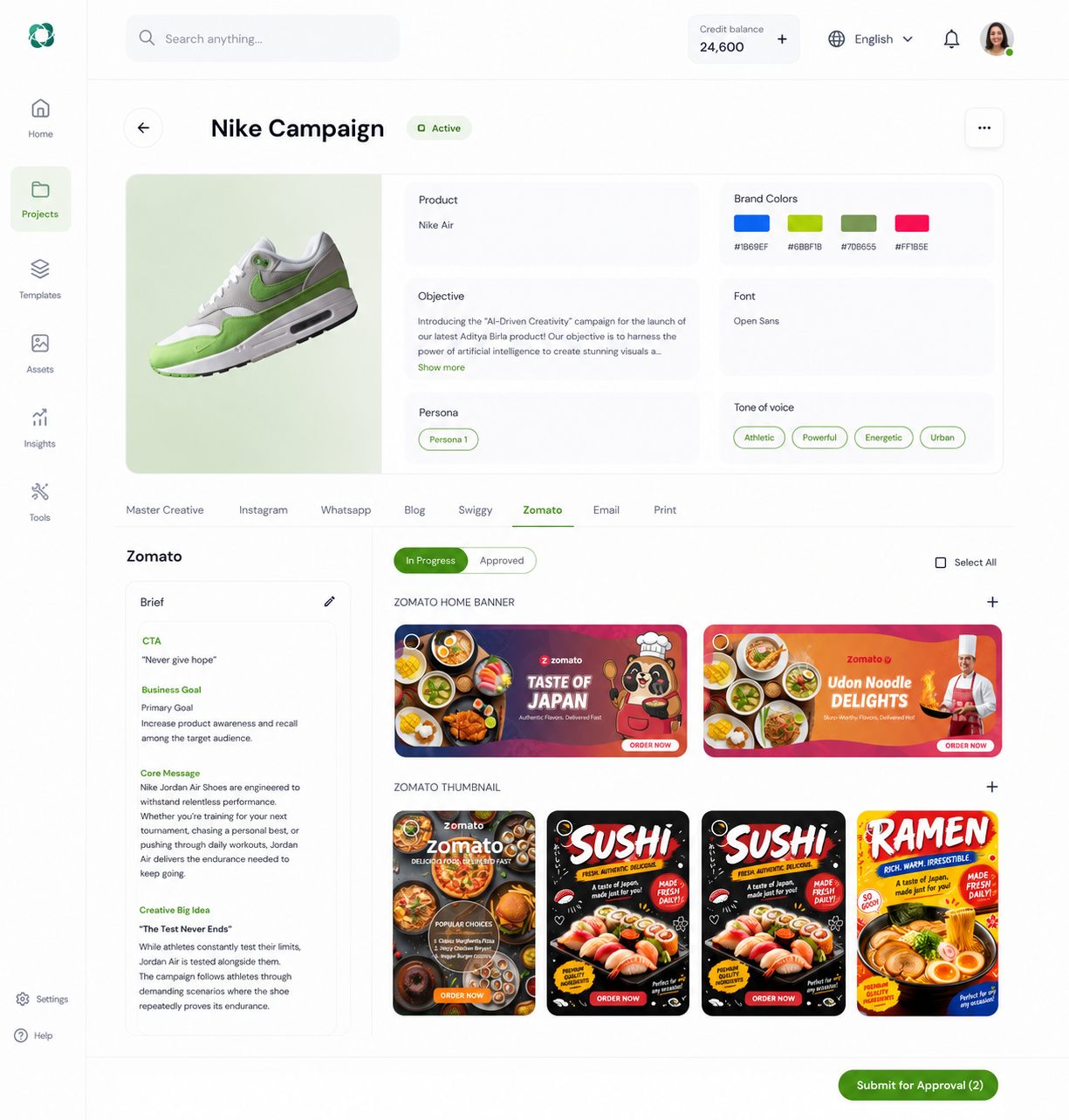
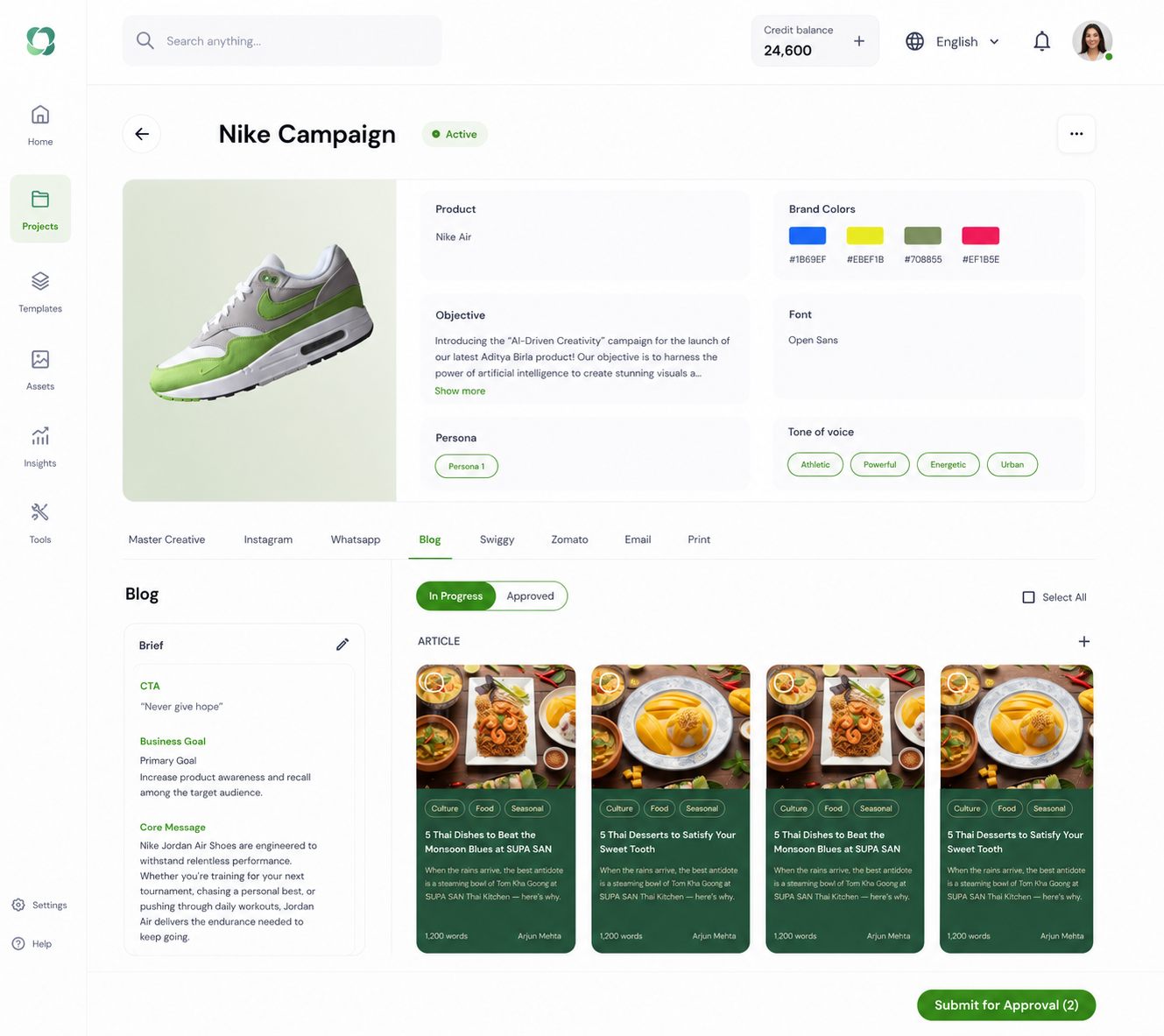
Working the room, not just the file
I joined requirement-grooming calls with stakeholders directly - vetting scope, surfacing edge cases, and more than once narrowing the product's focus by suggesting cuts and improvements that were adopted. On a four-designer team shipping fast, the design system I built from scratch was what kept campaign creation, content generation, user management, and analytics feeling like one product rather than four features.
Outcome
- A campaign process that once spanned four tools and multiple handoffs, collapsed into one AI-assisted workflow.
- Brand enforcement moved from post-hoc review to the generation step itself - off-brand content prevented, not caught.
- A from-scratch design system that let a small team ship a broad surface area consistently.
Product shown with representative content; client identity and proprietary details anonymized for confidentiality.